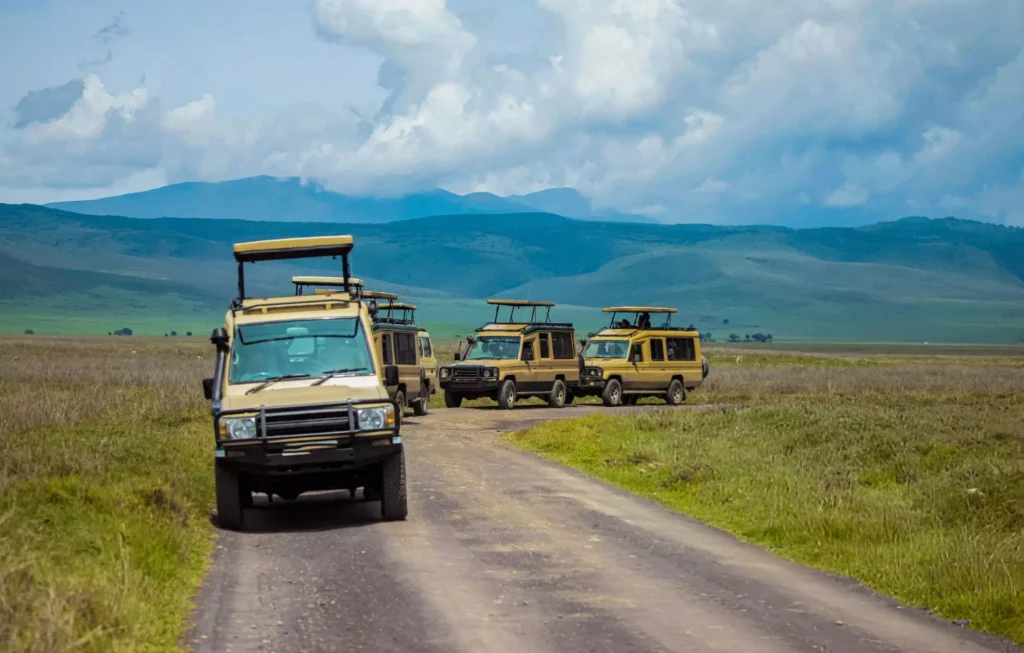
You need less than you think, and different things than you expect. A safari is not a fashion exercise and it is not a camping expedition either. The aim is to be comfortable across a wide temperature swing — genuinely cold at dawn, hot by midday — while staying out of the way of the wildlife and the dust. Here is what actually matters.
Clothing: neutral, layered, and less of it
Stick to neutral colours — khaki, olive, beige, brown. Bright colours and white show dirt and stand out; dark blue and black are best avoided altogether, as they attract tsetse flies in some parks. Pack layers rather than heavy items: mornings on an open vehicle are cold enough for a fleece, afternoons hot enough for short sleeves. Long sleeves and trousers in the evening help against insects. Most camps offer same-day or next-day laundry, so three or four days of clothing is plenty however long you travel.
The things people forget
- Binoculars — one pair per person, not per vehicle. The single item that most changes what you actually see.
- A warm layer — people pack for the heat and regret it at 6am on an open vehicle.
- Sun protection — high-factor sunscreen, a brimmed hat, sunglasses. The equatorial sun is stronger than it feels.
- Insect repellent with DEET, and any personal medication in your hand luggage.
- A soft-sided bag if you are flying between camps — light aircraft will not take hard cases.
Documents and health
Your passport must be valid for at least six months beyond your arrival and have blank pages. Most nationalities need a visa, commonly around $50, with US citizens paying $100 for a multiple-entry visa — check the current rules before you travel. A yellow fever certificate is required if you are arriving from a country where the disease is present; your travel clinic will advise on that and any recommended vaccinations. Travel insurance that covers medical evacuation is strongly recommended, and in many cases required.
Cameras and power
Bring more memory and battery than you expect to use, and a zoom lens if you have one — wildlife rarely poses close. Camps run on solar and generators, so charging is usually possible but not always fast; a power bank covers the gaps. A dust-proof bag for your gear earns its place on the dry-season tracks.
None of this needs to be expensive or exhaustive. Comfortable, neutral, layered, and light — with binoculars — covers almost everything.
Common questions
What colours should you wear on safari?
Neutral colours — khaki, olive, beige and brown. Avoid white and bright colours, which show dirt and stand out, and avoid dark blue and black, which attract tsetse flies in some parks.
How much clothing should I pack for a safari?
Three or four days’ worth is plenty however long your trip. Most camps offer same-day or next-day laundry, so packing light is easy — and essential if you are flying between camps on light aircraft.
Do I need my own binoculars?
Yes — ideally one pair per person rather than one shared per vehicle. They are the single item that most changes what you are able to see.
Do I need a yellow fever vaccination for Tanzania?
A yellow fever certificate is required if you are arriving from a country where the disease is present. Check with a travel clinic, which can also advise on other recommended vaccinations.